


I find the reporting by Rachel Gilmore to be interesting. She uses the tagline of “I’m your least favourite person’s least favourite journalist”.
She has recently been reporting on self-identified White Nationalist groups hosting “Active Clubs” in Canadian Gyms, and the fallout of the reporting (including in-person intimidation by members against the journalist).
Some sample articles, with more discussion on her site:

Situatedness
As a reminder of where I am situated, I’m a White (Scottish, Irish and French descent) male-cis-hetero (passing, as I don’t consider these binaries) Autistic person granted Canadian citizenship at birth in 1968 (I turn 58 later this month). See my “About” for more.
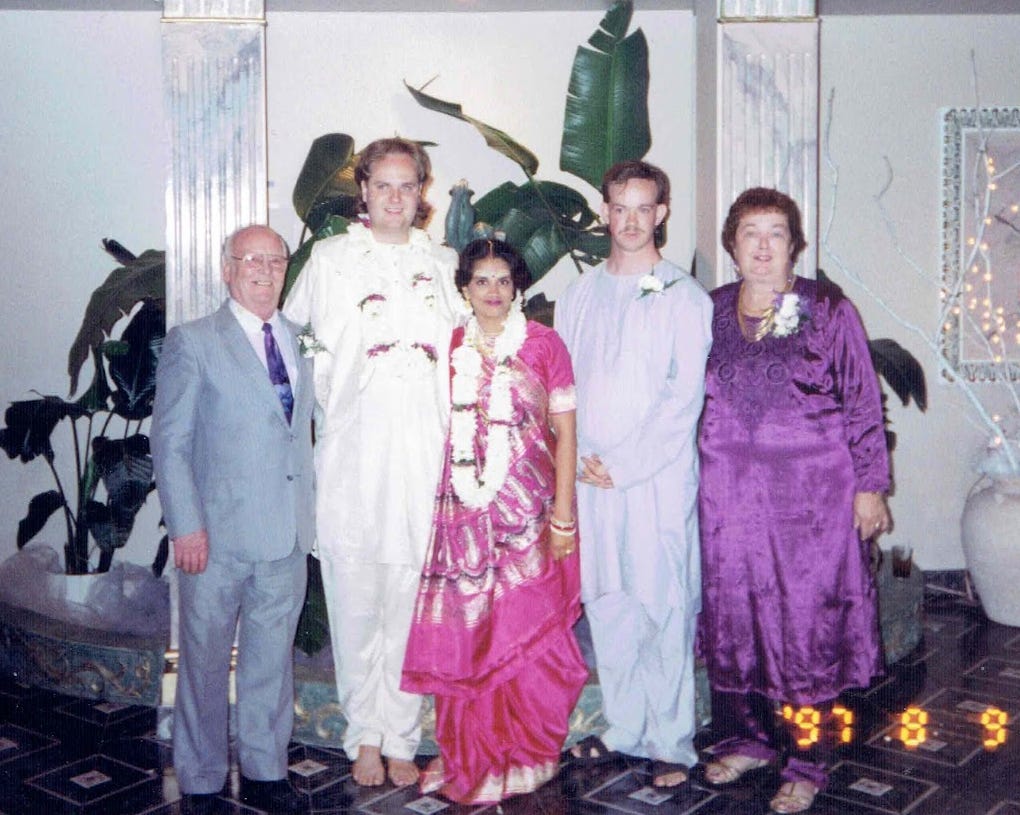
In 1995 I met my future wife, we were married in 1997, and I took my first trip to India in 1998 to meet more of my in-laws. While my wife was born in Vancouver and lived most of her life in Ottawa, her parents were born in India (Delhi and what is now called West Bengal).
While I was living in a so-called “mixed marriage” (mixed race – mixed gender isn’t considered worthy of note), I was oblivious to the actual meanings of race, racism or racialization. I only started learning about these things in 2020.
With that context, a few things came to mind while watching the recent videos (and reading articles) with Rachael Gilmore discussing self-identified White Nationalists.
Comfort with Familiarity
When recently discussing a Whites-only dating site, Rachael and her guest discussed how some might not understand what is wrong with that. They gave very specific reasons why the particular dating sites they were discussing were special (the specific conspiracy theories asked about for profiles, etc), but I want to discuss this more generally.
After almost 29 years of being invited into some South Asian spaces as an in-law, I have noticed something surprising (at least to me). While I am regularly told that I should automatically have “racial solidarity”, suggesting people of my own race will feel more familiar, that is no longer the case for me. In fact, I feel I need to filter and pretend to be someone I’m not around fellow White people far more than I need to with South Asians and many other “brown” people.

While I agree we feel comfort more quickly with a stranger who is from some groups over others, I have come to strongly believe that this relates to familiarity and not similarity to ourselves. I believe the whole in-group/out-group dynamics that White Nationalists fixate on is not so-much “human nature”, but a deliberate lifestyle choice.
Whether it is because of my Autism, or because of this exposure, I have become more and more open to learning about the worldviews – including spirituality – that originated in Southern and Eastern Asia, as well as domestic (meaning, Indigenous) worldviews/spirituality/etc. This is despite the fact that I grew up as a White (Western European descent) Christian under a set of settler-colonial governments that were created by-and-for Western European Christianity. In fact, it was only in recent years that I would have noticed this fact about the institutions still branded as the Dominion of Canada when I was born.

Self-identified doesn’t include everyone
One of the earlier books I read in the summer of 2020 was Stamped From The Beginning: The Definitive History of Racist Ideas in America by Ibram X. Kendi, and I followed that up later by reading How to Be an Antiracist.
Dr. Kendi’s books introduced me to the idea that the opposite of “racist” isn’t “not racist”, but “anti-racist”.
While I had also been introduced to the idea of “White Fragility” where “White” people were uncomfortable discussing racism, I didn’t really understand this until I had observed it first hand and had this discomfort other people had with the topic end or seriously damage relationships.

I have current feeling about fellow White Canadians that came to mind while listening to Rachel Gilmore’s videos. I could create 3 broad groups of these fellow White Canadians:
Self-Identified White Nationalists, who know and are proud of their White Supremacist ideas and want to live under governance that openly and transparently enforces those ideologies.
Anti-racists who oppose racism at a systemic level, and reject governance that enforce these ideologies – especially outside of Western Europe where these ideologies grew from the unique history of that region.
Self-identified “Not racists” who aren’t aware of their racial preferences/familiarity, and more importantly who believe that the Dominion of Canada isn’t built upon racist ideologies and those institutions don’t continue to protect and/or enforce these ideologies.
It is only with a huge amount of learning and self-reflection that I’m transitioning into the anti-racist group. Given I was in that “not racist” group the majority of my life, it is unlikely that I will have “disinfected” myself completely before I die.

While it is only my personal lived experience, I believe that White Canadian society has percentages similar to:
10% - Self-identified White Nationalist/Supremacist
10% - Anti-racist
80% - Self-identified “Not Racist”
Probably the hardest thing for me to come to accept is that the self-identified White Nationalists and the self-identified “not racist” White Canadian loyalists are a difference in degree rather than a difference in kind. It is only those on an anti-racist journey that begin to become a difference in kind.

The fact that it is only a difference in degree makes me believe it would be uncomfortably easy for that 10% self-identified White Supremacist group to grow without more of that majority recognizing the true nature of “racism” at a systemic (embedded into Canadian identity, values, culture) rather than individual “not me” performative level.


This was incredible! I agree with every word you said and it’s so helpful to have someone like you writing this and helping me understand a lot of what’s going on. Thank you!