



This article feels related to something I’ve been thinking about for a while.
Situatedness: I’m an Autistic cis-hetero male settler Canadian of Scottish, Irish and French descent. I grew up deeply embedded within Western European worldviews, and only since 2020 started to learn outside of that narrow silo.
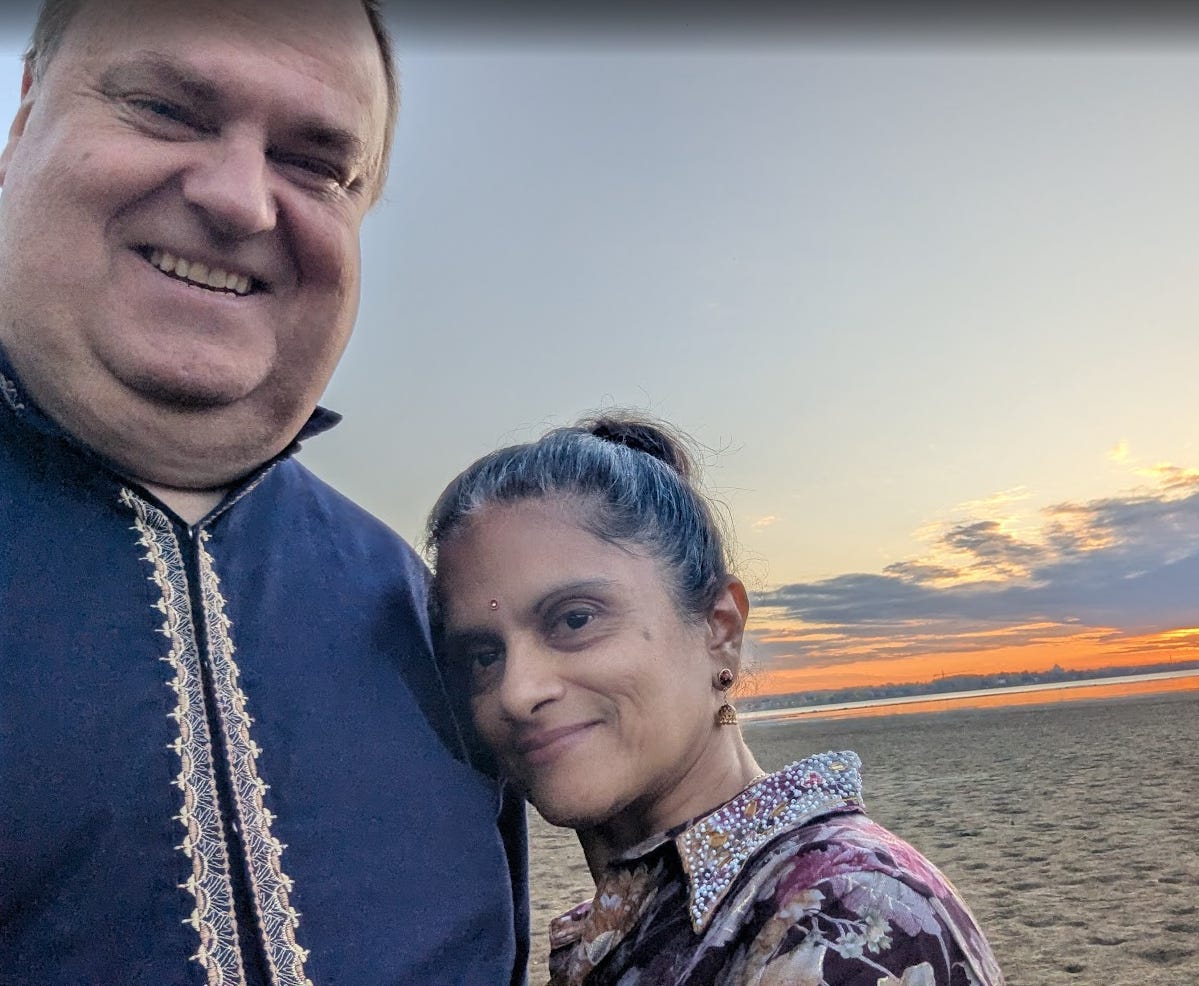
While what is included within “Whiteness” has subjectively changed over the centuries, at this point and within British North American (USA/Canada) settler-colonial culture, I am included clearly within “Whiteness”.
The article poses a great question: Can White people be in community, or even build deep friendships with People of the Global Majority (PoGM)?
(Or for that matter, even among other White people?)
The short answer is yes, but not without a LOT of intentional, consistent, deep, uncomfortable inner work.
- Sandra Coral
As an Autistic person, I’ve been confused about all the assumptions around “racial” solidarity, which goes beyond anything related to biology to worldviews.
It is fair for a racialized person to look at my White presentation and assume I subscribe to Western European worldviews. This is basic safety, given racialized people are always targeted by the dominant systems and cultures within what some call “The West”. And as Sandra Coral wrote, expendable from community for the slightest non-conformity.
“We’re desperate to do what’s expected of us for fear of rejection.”
- Sandra Coral
I do not believe it is valid for fellow non-racialized people to get offended when a fellow non-racialized person does not subscribe to Western European worldviews. These worldviews are not healthy for us, leave alone healthy to be imposed on everyone else.
As an Autistic person, I saw the social desire for conformity (to fit in, aware of how disposable people are if they don’t conform) to be yet more implicit, unwritten “social scripts” to enforce conformity and maintain the illusion of a collective. I saw “racial solidarity”/Whiteness to be a rigid, mandatory set of social scripts that I already didn’t fit into (for reasons I didn’t understand until recently).

As I began to learn about Western European worldviews, which meant I was also learning about worldviews that grew outside the unique history of Western Europe, I would honestly sit with the components of the views and see what resonated with me. Did I believe something because I had blind trust in what I had been told growing up, or because it was actually what I believed?
Part of finally accepting I’m Autistic (and being formally assessed), has also led me to starting to believe I’m also a Gestalt systems thinker. As a Gestalt systems thinker, I really have a hard time with individual emotions. The “with alexithymia” that came with my formal assessment doesn’t mean what some people believe it means, or what I was shown when I looked it up. I finally allow myself to recognize that I know emotions are happening, but I don’t always know which emotions (like the clipping that happens with speakers when the volume is too loud) or which “meat sack” around me is feeling it. It isn’t blindness so much as an inability to differentiate where emotions are coming from (as in -- originating within my meat sack or someone else's isn't as clean as it is for others.) It is a complex form of hyper-empathy rather than “emotional blindness”.
Given this, you might understand how Western European individualism is something that doesn’t resonate with me. I’m just as likely to be upset at someone else being hurt as I am being hurt myself, so quite a bit of the assumed (but not adequately studied) aspects of “human behaviour” and social hierarchies built into Western European ideologies (including economic theories – and not only Capitalism) make no sense to me.
After publicly noting that a few Western European ideologies are “not me”, I then started to have fellow White people telling me I was abandoning “my culture”.
But… was it ever “my culture”? What does that even mean?
First, my privilege. While actively unlearning what I now consider to be foreign ideologies, that being a choice I could make is itself a privilege. Those who are racialized (Indigenous, PoGM, etc) must navigate this daily without any choice. The fact that I could have been oblivious of these systems for the first 5 decades of my life is part of my unearned privilege, itself a function of the dominant system.

While I have distant ancestors who lived in Western Europe, I (and any of the family I met, including a great grandmother) never lived there.
It is only fairly recent that my ancestors were indoctrinated into what Western Europeans consider “Enlightenment” ideologies, or even Roman Empire co-constituted branches of Christianity. US and Canadian identity, values, culture and systems are derived primarily from British Empire Anglo Protestantism, and French/Spanish Empire Catholicism being second, with there being a flattening/erasure to “Boutique Multiculturalism” for everything and everyone else.

I have lived all my life in a region of what some call North America that has been the lands of the Anishinaabe peoples, with some of my more recent (four generations is extremely recent) ancestors living in other parts of Dish With One Spoon territories around the great lakes as well as other regions further up the St. Lawrence (Trois-Rivières). To me it seems obvious that as part of migration and naturalization that my ancestors and I should have naturalized to the laws and worldviews of this region – while none of my ancestors did, I am learning.
For those who think of (German, also built on Western European “Enlightenment”) Marxism when you hear talk of collectivism, I want to share a video that puts that into a more domestic context (and recognizes that Marx isn’t all that different from other Western Eurosupremacist ideologues)

In 1997 I married someone of South Asian descent, whose parents were both born in pre-partition India. I have family reasons to be learning about the philosophical, spiritual and other worldviews of the various relevant branches of Hinduism and South Asian philosophy.
Given where I have always lived, and who I have lived most of my life with, what makes Western European ideologies “my culture”?
So – if you hear the term “White” and feel the need to get offended, please recognize that what is really being discussed isn’t biology but blind adherence to antique foreign ideologies that we need to get beyond. Part of getting beyond those ideologies is getting past the notion that the unique history of Western Europe is the “universal” history of the world, that the term “modern” is synonymous with Western European, and other such supremacist ideologies.
It isn’t only about “being nice” to people you think of as some “other”, but moving out of unhealthy foreign ideologies that were never even for our own benefit in the first place – but tools to allow a very tiny set of elites to make humans administratively simpler for their Western European centralized Westphalian administrative states.
Sandra Coral asked:
Interdependence is described here as a “journey and a practice” rather than a destination. What is one small, daily practice that helps you move away from either total independence or being swallowed by the collective? What does the “in-between” look like for you?
I personally consider it a false-binary logical fallacy to believe we are stuck between Western European individualism and what Christabel Mintah-Galloway suggested was trapping collectivism.

We don’t need to fixate on the exclusive governance over land and life within a specific geographical boundary as imposed by Western Europe’s notion of Westphalian sovereignty. Outside of these European ideologies, relational sovereignty dominates. My personal attempt to help reclaim (within myself, social circles, and in any political activism) the complex, localized, and relational worldviews of the lands I live on is the focus of my acts of administrative rebellion.
Part of those worldviews include an “ethic of non-interference” within collectivism, and even the Matriarchy of the Haudenosaunee, which is very different from the social hierarchies that Christabel Mintah-Galloway spoke of.
For me, this administrative rebellion is the daily practice of stepping out of the false binary and into relational interdependence based on domestic worldviews (specifically the Dish With One Spoon territories I have lived in, and lands that have sustained me, my entire life).
This was truly excellent. I wouldn’t edit a single word.