


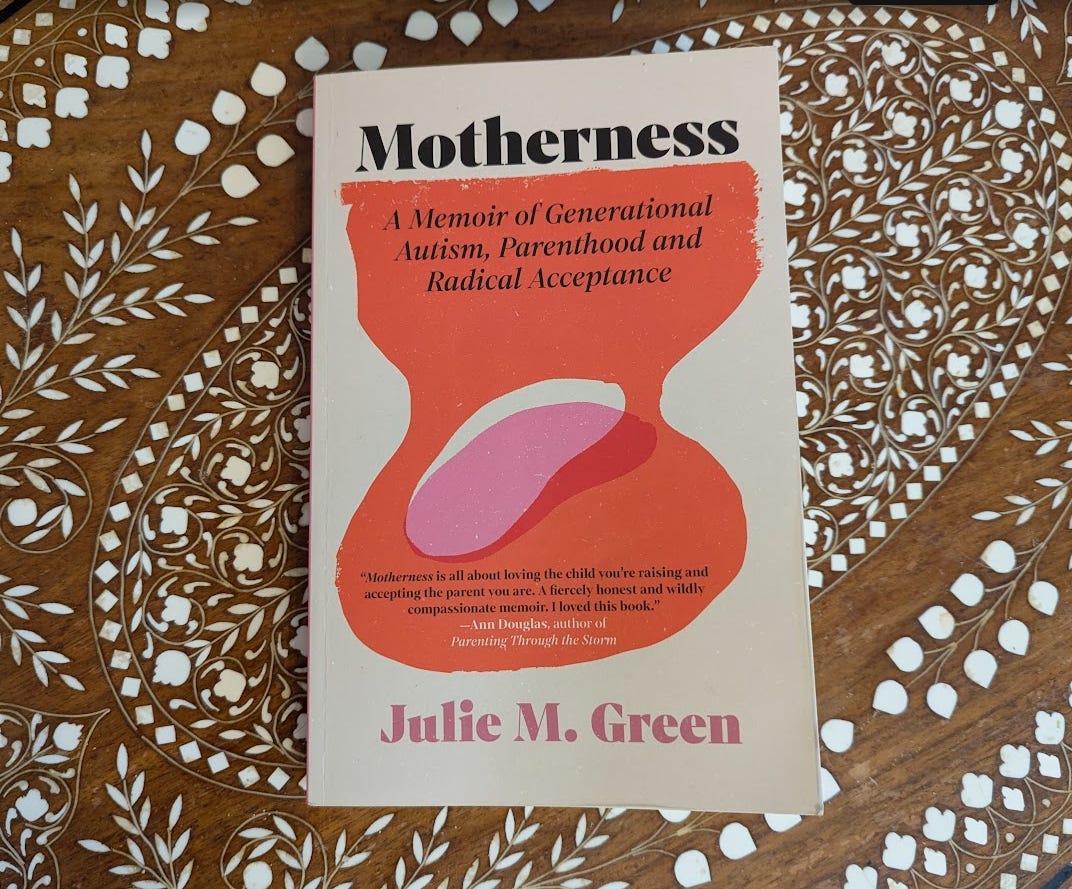
Julie M Green writes The Autistic Mom blog, which I have been following for about a year and became a subscriber in January 2025. When Julie announced her memoir was available for pre-order, I ordered it. I received my paperback copy on September 9.
Note: The publisher will send you the epub version of the book with proof of purchase, meaning you get two formats for the price of one.
The book pre-order announcement inspired me to write an article posthumously thanking my parents.
Thanking my parents

Julie M Green writes The Autistic Mom blog, and is the author of a book that is expected to be released in September.
I posted a smaller book review on November 29th.
Great read!
I was assigned at birth and present as a white male, so there will be differences in my experience of being late assessed (at 56) Autistic than other demographics and other individuals. That said, there is so much of this story about the author themself and their child that resonate with me. This isn’t only a story about a mother and child, but about someone assessed Autistic later in life and someone assessed Autistic as a child.
Whether you are Autistic yourself, or have someone at any age or gender in your life, this will add more different examples of lived experiences. Some of those experiences may feel personally familiar, but all will help with enabling more understanding of the wider variety of the human experience.
I really enjoyed the style of moving through time in a non-linear way, sharing related experiences in different time periods of her own life and that of her son, making connections between what was learned later in life and how that reshapes our understanding of previous experiences. As I have accepted and learned about my own Autism, I have reexamined my understanding of all the moments that have brought me to today.
I felt it might be interesting for me to discuss what is a common topic with Autistic people, and that is our sometimes complex relationship with food.
On page 223 of the paperback version of the book, in the chapter titled “Fat-bottomed girls (and boys)”, ARFID (avoidant/restrictive food intake disorder) is discussed. This is quite commonly co-occurring with Autism, and it is something I have observed in many fellow Autistic people. “Carson”, the pseudonym chosen for the author’s son, had an increasing number of foods added to a “banned list”.
I had some issues as a baby, unable to drink milk or orange juice (the phrase “projectile vomiting” has been used).
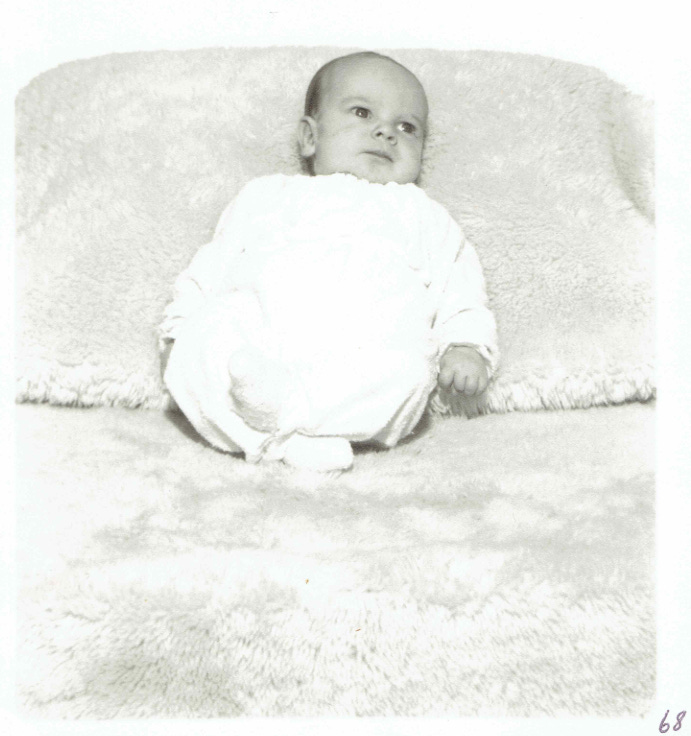
I was also a larger child, with the phrase “weeble wobble” from the then popular toy being mentioned. I stretched and became tall quickly between middle-school (grade 8) and high-school (grade 9), and for a time would have looked good on that (IMHO useless) BMI scale even if I’ve had leg and knee pain ever since.
Julie was more open and honest about her own relationship with food than I suspect most other people would be able to be. While I share some aspects, my overall experience with food has been different than what Carson seems to have experienced as he got older. I am also aware of the advantage Carson and I have, in that female presenting persons are always judged more harshly around “body image”.
Growing up in my family of 5 (a pair of cis-hetero parents, an older sister and a younger brother), my mother decided it was easier when cooking for 5 that if someone hated a food that it was taken off the list of food cooked at home.
I don’t remember the age, but very young I recognized that just because I couldn’t stand a given type of food one day won’t mean that I won’t crave it some other day. I had no language to express this at the time, but I learned very young to never suggest I didn’t like any type of food as that would close opportunities to future experiences.
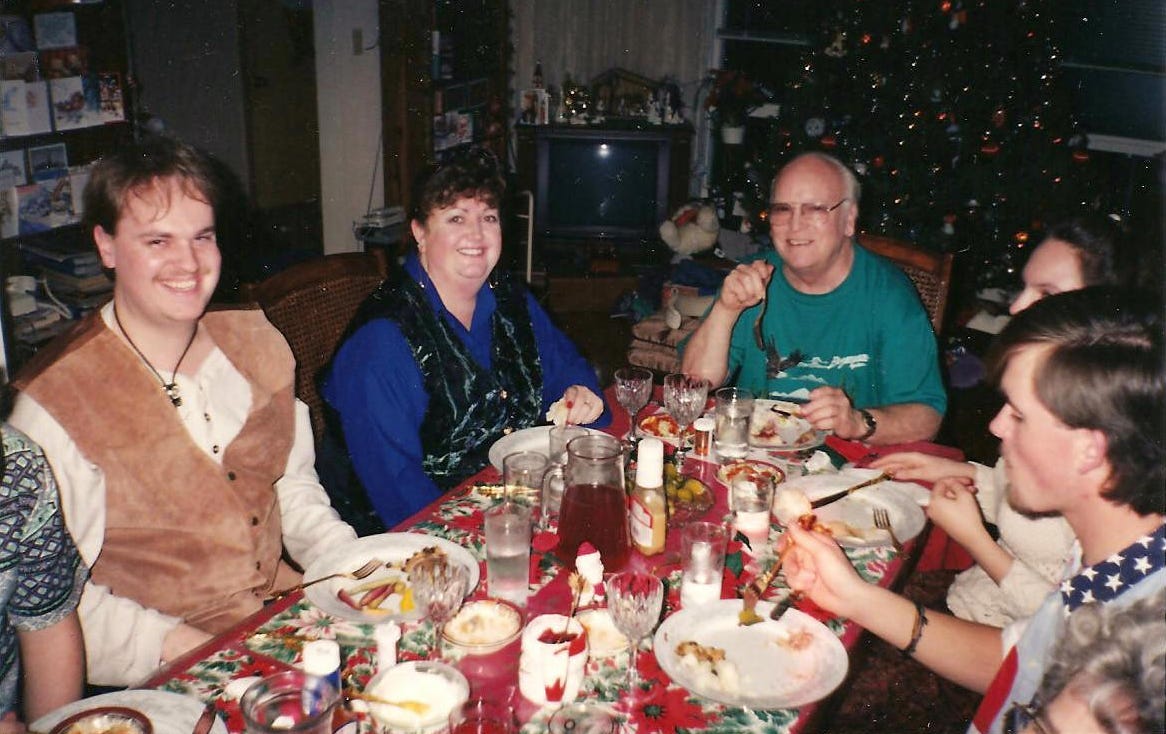
Learning about ARFID I recognized that food has more than merely a taste or smell, but also texture, appearance, and other sensations that may be heightened for Autistic people. Food was an entire constellation of sensations that fit within a mood and other context. This is apparently not true for everyone, with my learning about Autism regularly being me learning about people who aren’t Autistic.
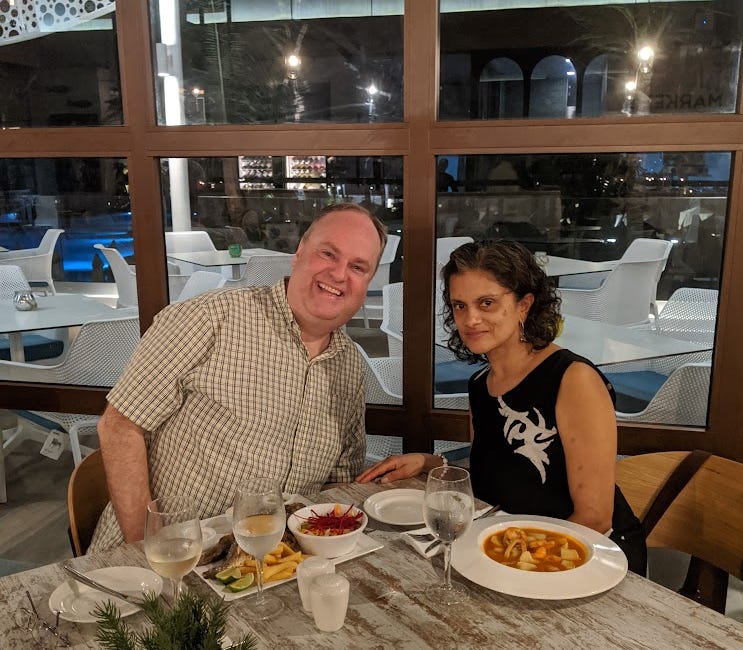
I believe for me that eating is even a stim (self-stimulatory behavior), much like my hand waiving, knee bobbing and dancing is. While some Autistic people with ARFID have a hard time eating, I regularly have a hard time not eating. Even when my body is telling me it is very full, just a look and smell of a food sends me back into memories and I just want to feel that all again. Eating is regularly a huge source of joy, and my spouse of 28 years will still sometimes comment when I’m doing my eating happy dance.
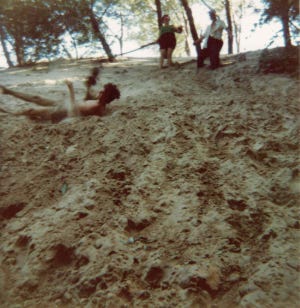
Different topic, but I wonder if the sand dunes and beach mentioned in the chapter “Sweet sensory child o’ mine” is the same one I kept rolling down over and over and over again until I could barely move/walk.
I learn so much about our shared past when you write about our family and your personal take. Thank you Russell.
Sorry I'm late seeing this, Russell. It's cool that my book has given you impetus to reflect on your own memories and relationship to food, among other things. And how funny you also mention Sandbanks. You are exactly right about location 😝