


Mike Oppenheim and I had what he calls a “casual conversation” for the paid part of his site. The first 6 minutes are free, and you need to subscribe to get the full conversation. Mike and I have been having many conversations in email since we first “met” online through Jesse Hirsh’s podcast.

There is a specific question Mike asked where my brain went so many different ways, and I had to pick one. I thought I’d share some of my thought processes.
What do you do internally because you’re a good nice guy um what do you do internally when the selfish bug starts to bite at you like let’s say this is my example i’m not putting this on you. There’s like two slices of pizza left, everyone’s had one slice and there’s three people left and you know all three of you want another slice like what do you do in those situations like do you have to talk to yourself to be patient, see if someone else wants it? Like, do you self-efface to be kind or is it natural for you?
For the first part of the question my brain focused on selfishness.
As someone who was told my entire life that there was something called “human nature”, and that everyone thought the same (thought like me), I thought selfishness was something that was taught. I thought we were all born as relational, of expanding our awareness outward from parents to communities and beyond.
There were then specific flawed economic theories that relied on selfishness, and a lack of sharing and caring, to “grow” and thus people were trained to be selfish. They were trained to treat other life as objects, and even worse as western concepts of property (exclusivity without responsibility) rather than relations.
Now that I accept I’m Autistic, I need to also accept that other people’s brains are wired differently. It might be that some people are born and think in isolation and need to be taught selflessness.
Unfortunately, with the dominant culture within Canada and the USA, it is hard to study that question given I’ve observed most people don’t think about the origins of their thoughts. They assume that because they are thinking it, that it must be their own thoughts, rather than blind loyalty to something they were taught that they have incorporated into their identity.
But then Mike mentioned pizza, and my brain headed in an entirely different direction.
I wrote about my relationship with food earlier.

Shortform: I really like eating, and believe it is to the level of being an Autistic STIM
I had to add a bunch of additional assumptions to set more limits to what Mike had already mentioned: that everyone had already had one slice, and there weren’t some other difference such as one or both of the other people having different situations outside of that meal (money for groceries generally, had they had an earlier meal, etc). I also ignored the option of cutting the pieces up so that 2 could be shared into 3.
When I am in that situation I will automatically take many things into consideration, as while I may love eating, there may be some actual need the other people have. I’m being told this isn’t the thought process everyone has, so I guess it is worth writing about.
This led me directly to the communication problem, where I can’t come up with what I believe to be the best action on my part because I’m rarely if ever supplied with sufficient information.
I have so many examples in my life where my actions weren’t what I would have done if I had more information, and other people made assumptions about my thought process because of what they observed.
“Oh it is just pizza – you are over-thinking this”. I hear that one as well regularly, that I’m told I overthink. While I may not share my thoughts, as that sets me up for negative judgement, this is how I think.
Oh, and pizza is so fun…
I didn’t share this one in the recording, but there is one from my first trip to India in 1998. Rina and I were married in 1997, and I wanted to be able to meet some of the in-laws that couldn’t come to the wedding in Canada such as her grandmother. While the trip was going to be all 4 of us (Rina and I and her parents), my father-in-law had health issues and Rina decided to stay to take care of him. I then decided to make the trip just me and my mother-in-law.
While I was marrying into a Bengali family, I didn’t actually know much of the overall culture. So, I went online.
One of the things I read was that it was an insult to refuse food that was offered.
So, while travelling, people would offer me food. I was a son-in-law (Jamai in Bengali), which is a particularly privileged position in the culture, and I am White which is granted even more privilege. There were times that I was the only one being offered food as we went from visit to visit.
(Note: Just because “race” and the gender binary are social constructs that impose a social hierarchy, doesn’t mean these hierarchies don’t have a huge impact on every interaction we will ever have. Something being “made up” doesn’t make it not real).
As well as the Autistic dialect issue, there was also the fact that most conversations around me weren’t happening in English unless they were directly addressed to me.
It wasn’t until I was back in Ottawa, hearing my mother-in-law’s stories from our trip together, that I heard how I was perceived: piggy.
My attempt to do the right thing, and take other people and other cultures into consideration, ended up leaving people with a different impression of my thoughts than what was in my head.
ASS U ME
Here are two other recorded conversations we had.
Coffin Talk #252: - Autism - Russell McOrmond
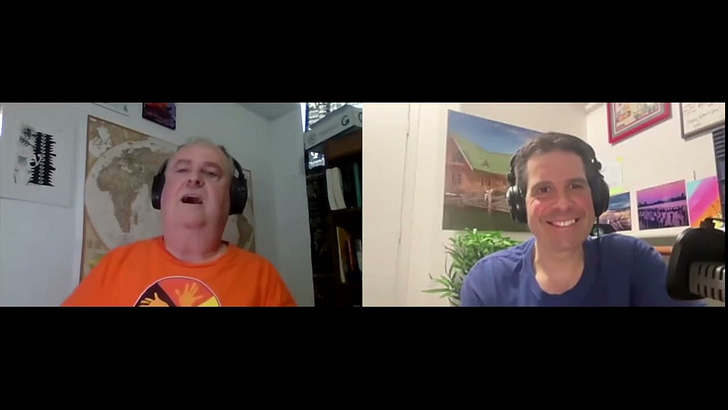
Mike Oppenheim and I had a great conversation on his podcast.
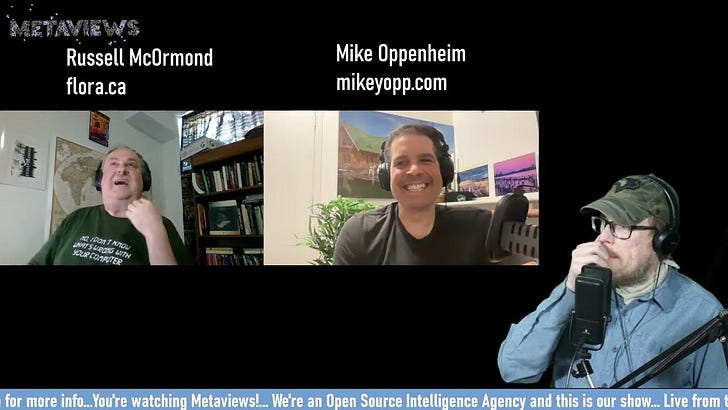
This was so awesome! Thank you