


NeuroDivergent Rebel put out a call on their Substack for submissions for a questionnaire, from which some quotes will be pulled for a new workbook.

I thought it might be interesting for me to publish some of my answers, both to share some of my own thoughts but also to possibly inspire other Actually Autistic people to participate. They fully accept self-identified Autistics, so don’t let imposter syndrome stop you from participating.
Note: I have skipped several administrative or questions I left blank, so this is not a complete set of the questions.
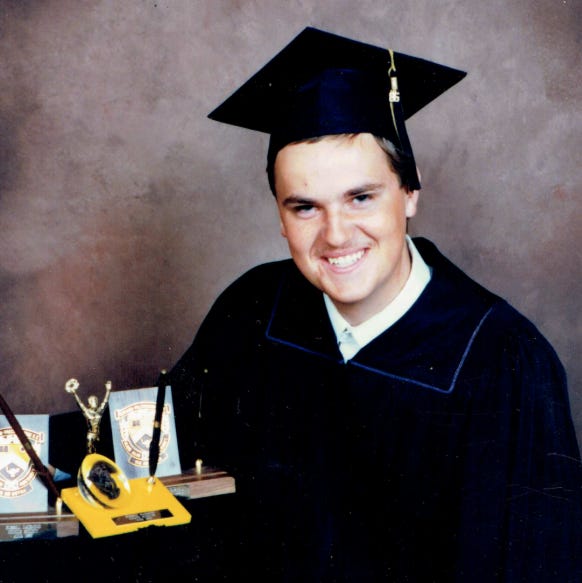
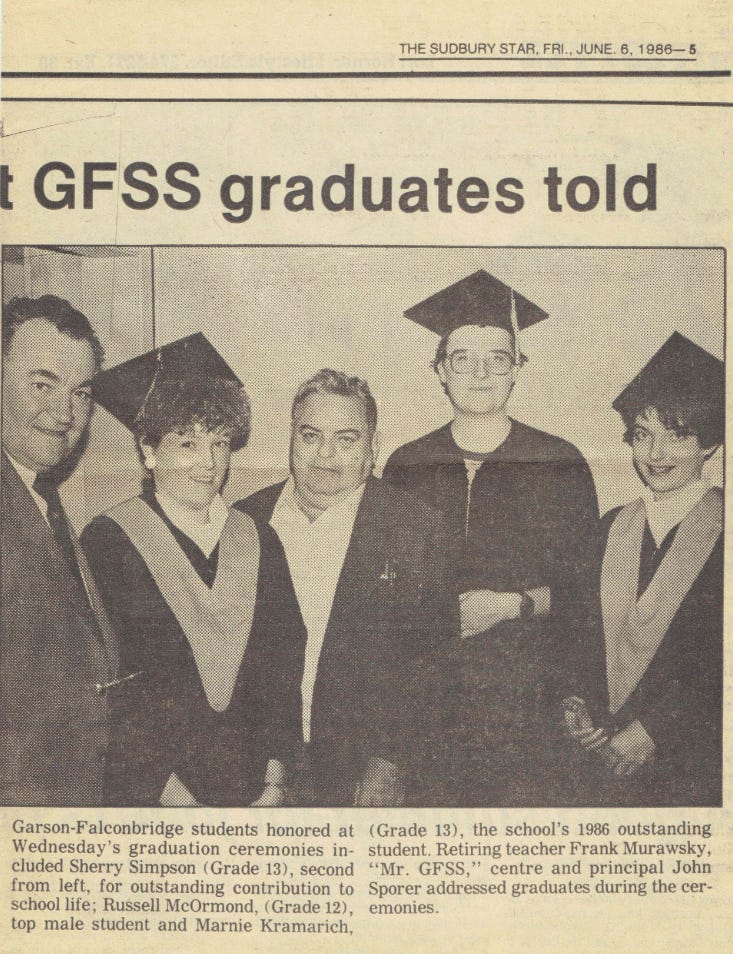
For clarification: I add these photos not for self-promotion, but to speak to a younger self (and anyone who today has the same feelings) who even having been offered these accolades was never convinced I was contributing sufficiently or “good enough”.
Q: Are you formally diagnosed as Autistic or are you self-identified?
Formally assessed Autistic in 2024 at age 56. Imposter syndrome meant I didn’t trust self-assessment.
Q: How old were you when you learned you were/are Autistic?
I started to accept the possibility in the year I turned 50, but not until 56 did I know for certain.
Q: What impact did learning you were Autistic have on your life?
Mixed. I started to learn why things had happened the way they did in my life. This is an ongoing process, even after I received my formal assessment. I consider this learning to be positive, even if it has brought back awkward memories. As I was learning about myself, what I was learning and my desire to become myself (some unmasking) came into increasing conflict with the strict hierarchical corporate culture at my employer. I was eventually sent home on sick leave -- essentially for being too Autistic at work. After my sick leave time ran out, I resigned.
Q: How does being Autistic influence your personality?
I don’t think there is anything about me or my personality that isn’t impacted by Autism. I have felt disconnected from the mainstream culture around me all my life.
I now learn that many of the things that I am most proud of, such as my sense of social justice and thinking of life beyond myself or any other individual, may relate to Autism.
I have some of the stereotypical social awkwardness, and I was driven to what is a very stereotypical profession for a male Autistic person in the IT sector.
I have had serial special interests, many of which were political in nature, and this drove me to become an activist and spend large amounts of my time as a volunteer. I hosted free websites for community groups in the 1990s when such community networking was new, and in the early 2000s I coordinated learning and activities related to technology law. This included being a witness for Canadian parliamentary committees, media interviews (print, radio and television), as well as public speaking – something that I have been afraid of since my childhood.
For most of my life, when other people said they were interested in a topic, but didn’t do a university-course level deep dive into it, I thought it was because they were lazy.
Q: Have you ever felt a bit ‘different’ from the people you meet and engage with in the world around you?
I have always felt different.
From an early age I learned to keep many of my own ideas to myself, as they weren’t considered socially acceptable. I did not, however, believe I ever “masked”. I felt I was a bad actor. It was only when I was dealing with Lyme disease and didn’t have the energy to mask that I realized what a mask was. I now understand a mask as a more automatic defense mechanism against social aggression and being ostracized.
I grew up being told that everyone thought the same thing, that there was some common “human nature”. Fortunately I started a deep-dive into anti-racism in 2020 and started to learn about worldviews beyond the narrow silos I learned as a White person (Scottish, Irish and French descent) within Western European settler-colonialism in North America. I had that as a background to finally accepting I’m Autistic, and realizing that I didn’t fit into this normative (Eurocentric, neuronormative, cisnormative, heteronormative, Anthropocentric, Androcentric, Christian) culture. I was able to recognize I wasn’t completely alone as there were people who thought and felt like I did, they just weren’t necessarily very common in the area I lived in and its mainstream culture. It has been interesting to hear from fellow Autistic people to find out that we are often better at cross-cultural communication, even those of us who are White. This is because we are more likely to feel out of place in our “own” culture and thus recognize the existence of other cultures and are more likely to be able to help translate and do code switching.
Q: What does ‘Autism’ mean to you as an Autistic person?
I think of Autism as a specific grouping of ways that a brain can be wired that are perceived by the outside world. While I wish there was a way to more directly study our inner-selves, and to be able to communicate observations within this culture, this is not how Western Eurocentric science (and thus healthcare) operates.
While I am proud of who I am, and use the Autism label openly, I believe there is so much that Western science hasn’t even tried to ask about the wide variety of ways that brains can work.
As flawed as it is, I am so thankful that the term exists as it has allowed me to reach out to and connect with other people who are similar, and have relatable ways of perceiving the world and relatable experiences. While it is obvious that not all Autistic people are the same, there seems to be a greater acceptance for a greater variety of neurological experiences - and greater acceptance that these wider varieties of neurological experiences should not be considered flaws or be medicalized.
Q: What is it like when you’re ‘in the zone’ with a favorite hobby, passion, or interest?
What is it like for a fish to be swimming in water?
It is only recently that I recognized the possibility of needing to explain this to other people, as I thought everyone did it. Many of my passions have related to topics that are part of my lifelong learning, and I assumed everyone participated in lifelong learning. I experience joy in learning new things, and connecting them together in the large network of other things I have learned. I don’t see the topic as separated, but interconnected in a big web, and thus while I may be focused on one area the new learning is interacting with all previous learning.
Q: How do you switch between very different tasks?
I am an IT person who has an understanding of how multitasking operating systems work. I seem to work the same way, and it always confused me that other people seemed to be able to task switch faster. I need time to save the current state, so that I don’t have to waste time re-doing some processing, and then I need to load in the context for the new activity or question.
Prior to the 2020 lockdowns, I was at an employer that expected everyone to be in common office environments. I would find it frustrating that people would come to my cubicle and expect a “quick answer” to some question. I tried to explain that interrupting to answer their “quick question” might take them only 3 minutes, but I will have easily lost 30 minutes for the expensive context switch.
It has been interesting to realize that other people don’t seem to have as much context to load, and seem to communicate and ask and answer questions with very little reference to the interconnected nature of ideas.
Q: What does it feel like when your focus is interrupted? Do you have any coping skills that you use to handle interruptions?
I wrote about that in the previous question. I get upset when I’m forced to context switch fast, and give up what I have accumulated within the pre-existing context. I have tried to have scripted answers, such as if the person can come back later or send the question in an email or text message. While that sometimes works, regularly the person will argue/plead and claim that their interruption is short, even though in my experience that has never been the case.
There are types of activities I can do with minimal context and focus, and interrupting them is fine, but other tasks require quite a bit more context and thus context switching is extremely expensive. In my prior employment I tried to ask if I could have coloured cards at my cubicle so that I could indicate ahead of time what types of activities I was engaged in and whether to interrupt me. I was told that was antisocial behaviour, and the hierarchy demanded that I always prioritize them over anything else (even work I was doing for them which they claimed was a priority).
Q: Is there something you know more about than most people?
There are many topics I know less of than most people, and other topics I know more about than most people.
It took me a while to accept that I have areas I know more. In my work, I was told by many whose area of expertise it is that I’m very good at systems administration and I seem to intuitively see the interconnections between different parts of large networks. Even while still in high school I was told that I was well above average in computer and electronics related skills (design, repair, programming, etc).
It turns out that the deep-dives that I do as part of having special interests gives me advantages in those areas, even if I constantly bump into disadvantages I have in other areas. Beyond computers and electronics, I have had many other topics within my lifelong learning.
Psychology
Mass communications
Environmental policy
International economic policy, such as investment agreement, Multilateral Agreement on Investment, WTO, World Bank, etc.
Technology Law (Copyright and Patents – offering workshops for policy makers, witness at federal parliamentary committees, public speaking, media speaking)
Telecommunications policy (I’ve been a witness in front of Canada’s federal regulator, the CRTC)
Political Party campaigning, policy coordination
Democratic Reform and Electoral Reform
Anti-racism and anti-colonialism
Q: How do you organize your activities?
I use very simple tools:
Timers, to allow me to context switch before meetings/etc
Online calendar, to schedule events
When I was employed I had online Kanban boards for both work and personal tasks, but as I’m retired I only list tasks in simple documents and/or in my online shared calendar.
Q: How would you describe your memory?
My memories seem to be interconnected with different senses, where a smell will remind me of some music, or music will remind me of the place where I first heard that music. I see pictures, which I am aware not everyone does.
I do not have a “photographic” memory for any of the senses, and until I learned about mind castles (although, not that term) I lost many memories as I didn’t know I needed to locate memories in space in order to recall them. When I was younger I thought my memory was poorer than most other people, but noticed that I had a fondness for maps and spaces -- and once I put those together I ended up with the ability to store memories that was possibly above average.
There are so many techniques around how different brains work that I wish were explained when I was younger. The assumption that everyone’s brain worked the same meant that I did very poorly in school (except for a few classes --where that spikey profile always confused the teachers/etc).
Q: Do you have any memory struggles?
I’m in my late 50’s, so.... :-)
I publicly blog and keep private searchable notes of my learning, to use as indexes. I remember that I have accessed something in the past, even if I don’t remember every detail, and then these notes and indexes help in bringing back the details.
Q: Do you have any sensory or motor control differences? If so, what is that like for you?
In my childhood, my parents brought me several times to have my hearing checked. The hearing tests would always show that my hearing was fine, but my parents remained concerned. This was one of the things that happened in the 1970s that if they happened in the 2020s would be recognized as an audio processing disorder. My problem was never that I couldn’t hear things, but that I could hear everything very well but couldn’t separate all the sounds.
In my teens in the 1980’s I learned to lip read to help with figuring out what people were saying. It turns out that this not only helped with my audio processing, but also might have had some people believe I was looking at their eyes because I was at least focused on some part of their face.
At university in Psychology class I learned about the “cocktail party effect”, and learned that this is something other people can do but that I can’t. Even into adulthood, if I was in a large crowd with that type of communication I would sometimes be spending so much energy trying to figure out what was going on that I would end up with “Klingon Face” – where my forehead would be very red and hot, and there would even be some ridges.
I apparently have alexithymia. When I was younger, at least a few times a year I would have an episode where I might be walking along a street and then all of a sudden I couldn’t see (well, or not at all). I would just stop moving, wait a while, and eyesight would eventually return to normal. About 4 years ago one of these episodes happened as I was coming into work, and a coworker told me I was likely having a panic attack. I was unaware of having any large emotions or being in a panic, but upon reflection this made sense. What I had thought was some undiagnosable neurological problem turned out to be simple panic attack episodes.
I’m clumsy, and have been known to bump into things, but that isn’t all that interesting or unusual.
Q: What are your communication needs? How do you communicate best?
I communicate best in writing, where I can take the time to translate between dialects or code-switch – now that I have a better understanding of why there were so many miscommunications in the past.
If in person, I prefer one-on-one or small gatherings where there is a minimum of overlapping sounds. It isn’t only overlapping speech, but other sounds that can cause a problem as all sound seems to come in at the same priority.
When I am out of my home, and don’t need to be communicating, I regularly wear noise-cancelling headphones. This is something I have done for the past few years, and wish I had known what my audio processing issues were younger so that I could have made use of tools as they became available.
I really dislike social lying, and people “saving face”. I would rather people were more open and honest. I take people at their word, only to find out that there was some hidden messaging in what they communicated with me. As well as being confused by other people’s social lying, I regularly have people misunderstanding my communication as they assume there must be some hidden message that doesn’t exist. They aren’t used to people being open and honest, without some ulterior motive.
Q: What is your communication style?
(Question expanded with a list of examples of styles)
Yes.
What I mean to say is that I’m all of those things at different times: direct, literal, honest, gentle, firm, skeptical, curious… or something else.
I have had some people say I’m an amazing listener and am gentle, while other people claim I’m arrogant and rude. I don’t think it is actually a difference in my communication style, but how I’m being interpreted by the other person/people I am communicating with. When there is a miscommunication I try to figure out how what I’m expressing is being interpreted in a way different than my intention, but even being in my late 50’s I regularly lack the experience required to figure out what got lost.
Q: What does an ideal social gathering look like to you?
(Asked about “rules of engagement” and other potential aspects of the gathering)
My experiences have been mixed.
I like to learn, and that is both subject areas as well as learning about other people. I don’t like playing games, although I did in my youth as I was doing as everyone else was doing.
My preference is to just have conversations, maybe around food, but without the need for games or other props.
Minimal overlapping sound is preferable, which does limit the number of people that can be gathered based on how disciplined the people are in being able to share time with other people.
I posted an article about an experience with an Adult Autistic social group I was part of for a while, but that ended up collapsing. It reminded me that “rules of engagement” can end up being too subjectively interpreted, so as much as I might think I’d want them -- they have largely backfired.

This was my first time this happened with fellow Autistic people, but not the first time when “rules of engagement” ended up being a barrier to Autistic participation. I wrote earlier about workplace “harassment” policies.

Q: Is it easy or difficult for you to name your emotions and know how you feel?
I’ve been assessed with Alexithymia. It is difficult, and I regularly need to spend time to figure out which emotion I am having before I can work on the why and reduce the intensity of the emotion (if the intensity is a problem/distraction/etc).
Q: Do you ever have ‘big feelings’?
I have always had “big feelings”. I thought that was something everyone had, but other people were just more skilled at not expressing it.
In recent years I’ve taken up learning about Yoga (not the poses, but the philosophy/etc from South Asian guru’s) and meditation. Moving outside of Western supremacist/normative thinking in general has been calming.
Q: Do you have any tools that you use for emotional or energy regulation (to help you get moving when you’re feeling sluggish or to help you slow down if needed?
I advise every fellow Autistic person I know to learn about spoon theory. For work I learned about resource management, and it is something I notice is a skill that is generally lacking in this culture. We need to start by recognizing that it is not possible to do everything, and that we need to recognize that limited resources exist and that we must prioritize. Taking on too much merely sets us up for failure, and makes us feel horrible about ourselves.
Much of North American colonial culture is built upon a Puritan/Protestant Christian work ethic, which drives people to be subjectively “productive” all the time. This is not a healthy way to live, nor is it a healthy thing to demand or expect of anyone else. Many aspects of mental health require jettisoning dominant aspects of North American colonial culture.
Q: Do you find comfort in rituals and routines, or do they bore you and stress you out?
I find comfort in routines, but there are aspects of my life where I like to be adventurous. One common Autistic trait I don’t have is food restrictions. When I go to a restaurant I love to try new things and new tastes, and I have come to believe that eating is a stimm for me. When I travel, food is a huge part of the experience.
Q: How do you feel about last-minute surprises or changes to your plans or routine? Are they your biggest nightmare or no big deal?
In order to be comfortable, I have to have an idea of what to expect so I can load a context into my brain -- what scripting, how filtered/talkative I should be, my existing knowledge about other participants in order to translate/code-switch/filter/etc. As long as I’m given time to context switch, I am fine with change. It is when I’m expected to “perform” without the time to load context that I unravel.
Q: Can you think of times when you have masked (hid or downplayed your Autistic traits, experiences, or needs)?
I did not know what masking was until I had Lyme disease and lost the ability to mask. Misunderstanding what a mask was blocked me from fully accepting Autism. It was the largest source of skepticism that I could be Autistic. I’m now aware I’ve masked for as long as I can remember.
Q: What types of situations or people make you feel as if you need to hide or mask your Autistic traits?
Short: I sometimes need to try to hide traits at home with my wife, who I met more than 31 years ago.
Q: What do you wish the rest of the world understood about Autistic camouflaging/masking?
The term “rest of the world” is a bit confusing to me.
I wish the dominant North American settler culture was more open to diversity, and that includes recognizing that Autistic people exist and are being forced to pretend to be something other than what they are in order to not be attacked as an “other” in some friend-enemy binary divide. While some people try to only attribute that friend-enemy ideology to German jurist Carl Schmitt, I believe it is core to North American settler-colonial identity, values, and culture which predated what happened within Germany.
Q: Do you ever have Autistic meltdowns or shutdowns?
I have had meltdowns and shutdowns throughout my life, and in 2023 even full-on Autistic Burnout. Now that I am finally aware of what is happening, I focus on resource management (spoon theory) and other techniques to try to detect situations where it might happen to try to avoid it happening in the first place.
I wish we lived in a culture that included a culture of consent and trauma informed care. I find videos such as the following to be extremely helpful, and I regularly share this link.
Q: How do you decide if someone is a safe person to disclose your Autistic identity to or not?
I am in my late 50’s, and currently retired. With all the privileges I have had, including a relatively successful career, I feel it is my duty to be open about being Autistic to try to normalize this.
There are some environments where this disclosure has gone poorly, and I keep interactions in those spaces to a minimum. This has included largely “tuning out” of relationships that were previously close, including family friends.
Q: When/if you disclose being Autistic to others, what do you normally share about being Autistic?
I share that I’m Autistic, and that I’m willing to share my experience and help clarify what it means. I am aware that few in this culture have a correct understanding, and discuss that even as someone who has been Autistic my entire life I was filled with misconceptions.
Q: Do you have any advice for Autistic people who are new to sharing that they are Autistic with other people?
It is unfortunate, but I believe people need to do a cost/benefit analysis for the specific people and environment.
Are you sharing with a current or potential employer? I believe it is important to be aware that for many organizations in the North American context are only performative when it comes to DEI, and that box checking exercises and nice sounding words may not mean you will be accepted to be yourself in the workplace.
I suggest moving into sharing at a slow enough pace to determine how the information is being received, and how open the other person is to actually understanding what being Autistic means. Not everyone is open to lifelong learning, and some are extremely resistant to any information that conflicts with the dominant culture.
Thank you Russell. You are an inspiration. Should you me ask why, I would reply that I am inspired by your honesty. Your clarity as you sort through your past with the magnifying glass of autistic truth. Your willingness to share your perspective and thus your willingness to teach. Your courage to explore and even maybe map our inner worlds of experience, chemistry, spirit, and more.
I LOVED this. All of it! I'm truly intrigued by this part:
"I really dislike social lying, and people “saving face”. I would rather people were more open and honest. I take people at their word, only to find out that there was some hidden messaging in what they communicated with me. As well as being confused by other people’s social lying, I regularly have people misunderstanding my communication as they assume there must be some hidden message that doesn’t exist. They aren’t used to people being open and honest, without some ulterior motive."
I totally understand the many sides of this debate, and every time I try to "pick one to fight for" I feel compassion for those I'm leaving behind...some people suffer from humiliation that haunts them when it's public, so we're supposed to protect "that class" of people, with this rule, but this rule does, so clearly, what you state...
Do you wrestle with this?